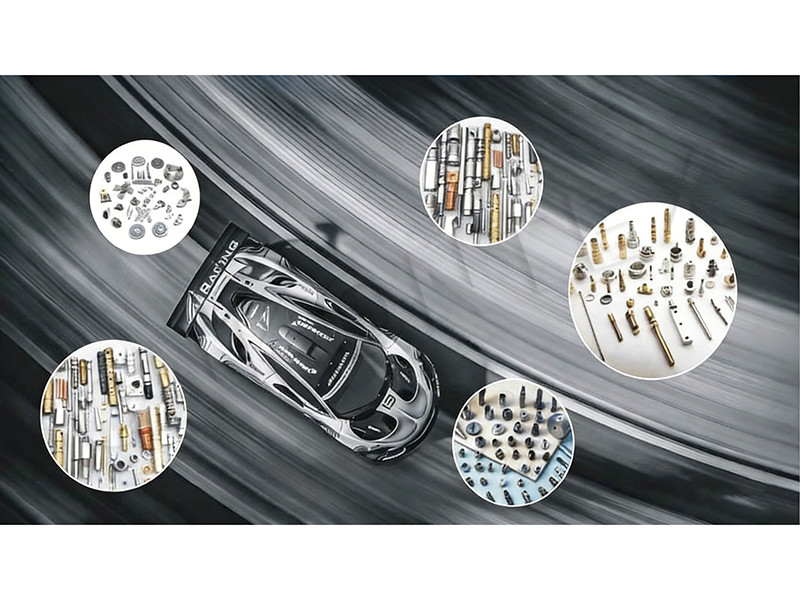
Manufacturing Processes of Automotive Precision Parts
CNC Machining: The Industry Standard
CNC (Computer Numerical Control) machining is the cornerstone of producing automotive precision parts. This process offers unparalleled accuracy, repeatability, and flexibility, making it ideal for both prototype and mass production.
CNC Turning: Primarily used for rotary parts such as shafts, pins, and pistons. It involves rotating the workpiece against cutting tools to shape the part.
CNC Milling: Suitable for complex geometries and multi-axis machining, milling creates intricate features on components like flanges and housings.
Stamping: Used for flat, thin parts such as cylinder head gaskets, stamping forms sheet metal into precise shapes with dies and punches.
Materials Used in Automotive Precision Parts
Material selection is crucial for the performance and durability of precision parts. Common materials include:
Metals: Steel, stainless steel, aluminum, brass, titanium, and various alloys are widely used for their strength and machinability.
Plastics and Composites: Engineering plastics like PEEK, PC, and POM offer lightweight alternatives for non-load-bearing parts.
Specialty Materials: Depending on application, heat-treated metals or coated surfaces may be employed to enhance wear resistance and corrosion protection.