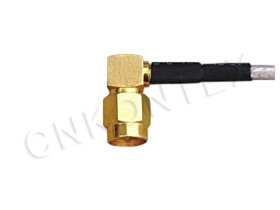
Types of Coaxial Cable Assemblies
Understanding the types of coaxial cables and assemblies available helps you choose the best fit for your application.
1. Micro-Coaxial Cable Assemblies
Characteristics: Extremely small outer diameter (0.81 mm to 1.37 mm), high reliability, and sensitivity.
Applications: Ideal for devices with limited space such as smartphones, tablets, laptops, and compact IoT devices.
Example Cables: RF 1.13, RF 1.37.
2. Flexible Coaxial Cable Assemblies
Characteristics: Designed with stranded or solid conductors, often double-shielded for low loss.
Applications: High-speed data and video transmission, indoor wireless setups.
Example Cables: RG-58, RG-174, RG-316.
3. Conformable Semi-Rigid Cable Assemblies
Characteristics: Hand-formable, malleable cables that maintain signal quality despite bending.
Applications: Custom routing in tight spaces without compromising performance.
Example Sizes: 0.047 inch, 0.085 inch diameters.
4. Low PIM (Passive Intermodulation) Coaxial Assemblies
Characteristics: Minimize unwanted intermodulation signals, essential for high-density cellular networks.
Applications: Distributed antenna systems (DAS), 4G/5G cellular infrastructure.
Example Cables: RG-401, RG-402, 141 semi-rigid cable.
5. Super Flexible RF Coaxial Cables
Characteristics: Corrugated or helically wound outer conductors offering exceptional flexibility and low attenuation.
Applications: Cellular base stations, broadcast facilities, tower runs.
Sizes: 1/4", 1/2", 5/8".