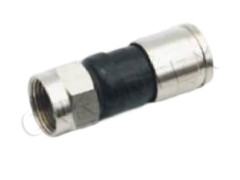
How Does an F Connector Work?
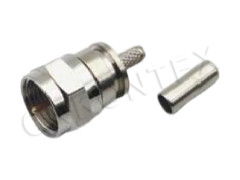
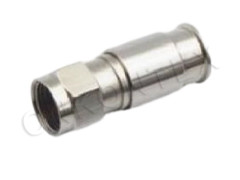
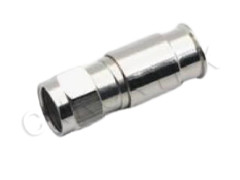
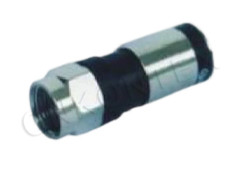
Unlike many other RF connectors, the F connector uses the coaxial cable’s center conductor as the male pin, simplifying the design and reducing manufacturing costs. The male connector consists primarily of a body and a captive nut, which threads onto the female connector mounted on equipment or wall plates.
The female connector contains a socket and dielectric insulator, designed to fit snugly around the male connector’s center conductor. This design ensures a tight electrical connection and consistent impedance throughout the signal path, critical for maintaining signal quality.
Applications of F Connectors
F connectors are ubiquitous in modern communication systems due to their versatility and performance. Here are some common applications:
Cable Television (CATV) Networks: Used extensively to connect cable lines to TVs, set-top boxes, and distribution equipment.
High-Speed Cable Modems: Ensures reliable broadband internet connectivity by maintaining signal integrity.
Satellite TV Systems: Connects satellite dishes to receivers, often requiring weatherproof versions for outdoor use.
Hybrid Fiber-Coaxial (HFC) Networks: Supports advanced broadband infrastructure combining fiber optics and coaxial cables.
Customer Interface Modules (CIMs) and Head-End Equipment: Facilitates signal distribution and management in cable networks.