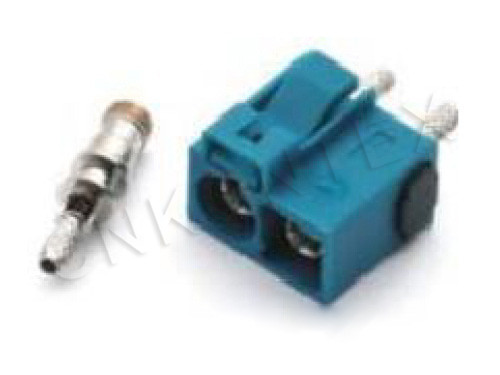
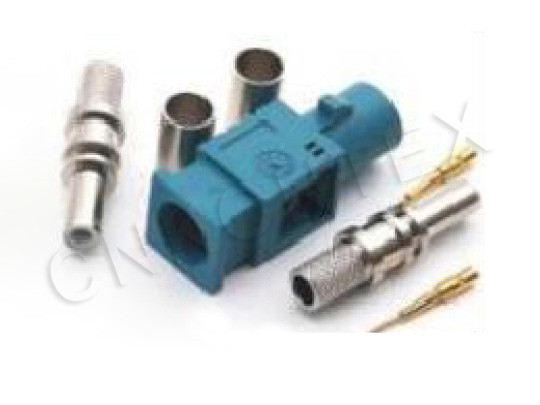
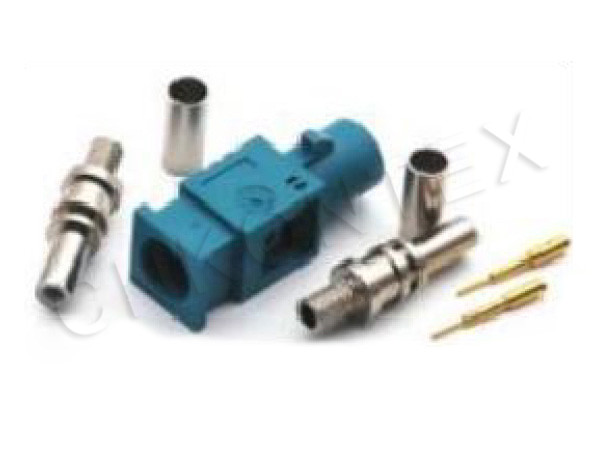
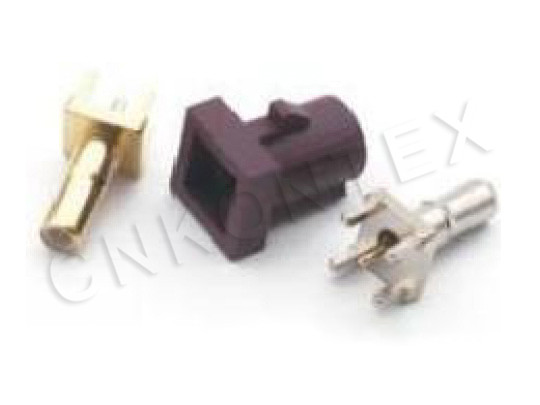
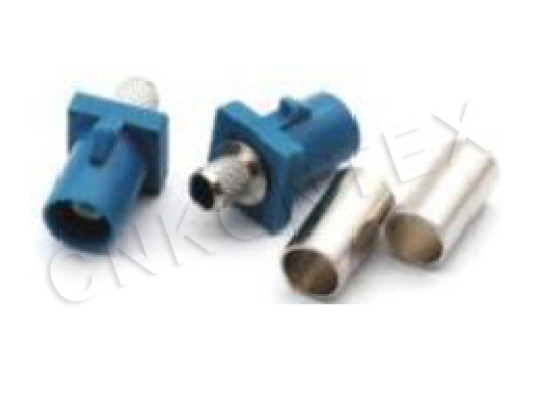
What is an HSD Connector?
HSD stands for High Speed Data, and an HSD connector is a high-performance, fully shielded connector system optimized for differential data transmission at high speeds. Primarily developed for automotive use, these connectors support multiple protocols such as LVDS (Low Voltage Differential Signaling), USB, Ethernet, IEEE 1394 (FireWire), and GVIF (Gigabit Video Interface).
The HSD connector system is engineered to maintain signal integrity and minimize electromagnetic interference (EMI), essential for the reliable operation of in-vehicle communication networks. Its design is based on a 100-ohm differential impedance system, which ensures optimal performance for high-speed digital signals.
Key Features and Benefits of HSD Connectors
Automotive manufacturers and suppliers like Amphenol RF, TE Connectivity, and Rosenberger have developed robust HSD connector portfolios that incorporate advanced features tailored to automotive environments:
High Data Rates: Supports data transmission speeds up to 6 Gbps (TE Connectivity) and typically up to 1.6 Gbps (Amphenol RF), accommodating the increasing bandwidth needs of modern vehicles.
100-Ohm Differential Impedance: Ensures signal quality and reduces reflection and attenuation across the transmission line.
Fully Shielded Design: Provides superior EMI and RFI protection, critical for maintaining signal integrity in electrically noisy automotive environments.
Robust Mechanical Construction: Designed to withstand harsh conditions such as vibration, temperature extremes (-40°C to +105°C), thermal shock, and mechanical shock.
Push-On Coupling Mechanism: Facilitates easy and secure mating with engagement forces optimized for automated manufacturing.
Prevention of Mismating: Features such as female contact closed entry and mechanical coding reduce the risk of incorrect connections.
Compatibility with Multiple Protocols: Supports LVDS, USB 2.0/3.0, Ethernet (100Base-T1, 1000Base-T1), IEEE 1394, and proprietary protocols like GMSL and FPD-Link.