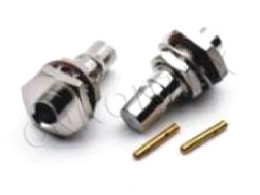
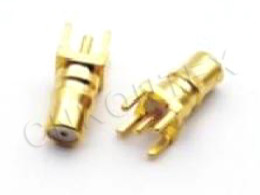
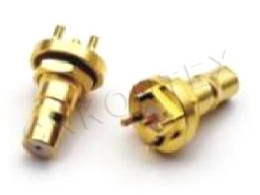
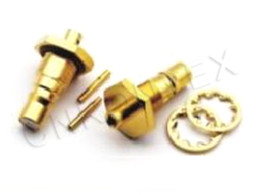
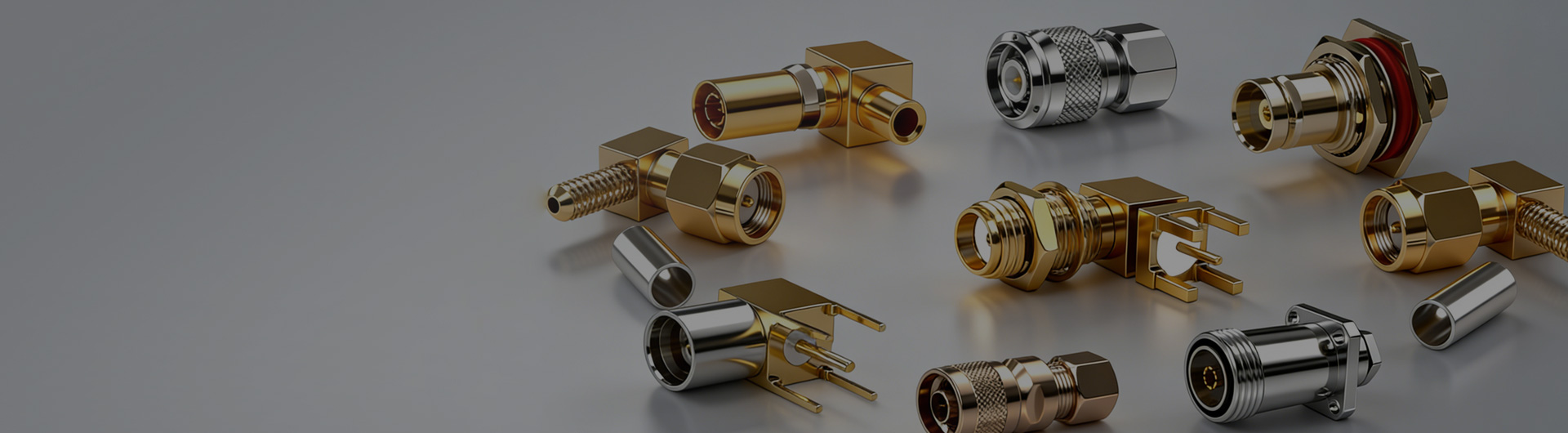
What is a QMA Adapter?
A QMA adapter is a type of RF coaxial adapter that connects QMA connectors to other types of RF connectors such as SMA, TNC, or N-type. The term “QMA” stands for “Quick-locking Mechanism Adapter,” highlighting its key feature — a snap-on coupling mechanism that allows for fast, tool-less installation.
Unlike traditional threaded connectors like SMA and N-type, QMA connectors feature a 360-degree rotatable snap-on interface. This design enables quick mating and demating, reduces installation time, and minimizes RF leakage. QMA adapters are typically designed for 50-ohm impedance systems and can operate over a wide frequency range, often up to 18 GHz, making them ideal for high-frequency RF applications.
Key Features and Benefits of QMA Adapters
Understanding the technical advantages of QMA adapters helps explain their growing popularity in RF systems:
Quick Snap-On Interface: The innovative snap-lock design allows for rapid connection and disconnection without the need for torque wrenches or special tools. This reduces installation time and labor costs.
360° Rotatable Coupling: After mating, QMA connectors can rotate fully, providing flexibility in cable routing and reducing mechanical stress on the cables.
High Frequency Performance: QMA adapters typically support frequencies from DC up to 18 GHz, suitable for a wide range of wireless communication applications.
Low VSWR and Insertion Loss: With typical VSWR values as low as 1.052 (DC–3 GHz) and insertion loss under 0.06√f (GHz) dB, QMA adapters maintain signal integrity and minimize power loss.
High Power Handling: These adapters can handle power levels up to 75 watts at 10 GHz (at 25°C), making them suitable for demanding RF environments.
Durability and Reliability: QMA connectors and adapters are built to withstand repeated mating cycles (often 500+), ensuring long-term reliability in the field.
Low RF Leakage: With leakage levels as low as -120 dB (DC–3 GHz), QMA adapters ensure minimal interference, crucial for sensitive RF systems.