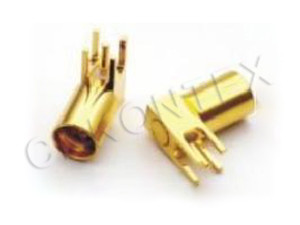
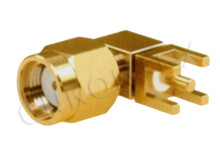
What Is RF Connector Plating and Why Does It Matter?
RF connector plating is the thin metallic coating applied to the connector body and contacts to provide corrosion resistance, low contact resistance, and stable electrical performance over time, with the choice of plating material and thickness directly affecting insertion loss, VSWR, PIM, and mating cycle durability. Plating is applied over a base metal (typically brass or stainless steel) using electroplating or electroless plating.
The primary roles of RF connector plating:
Corrosion resistance. Prevent oxidation of the base metal.
Low contact resistance. Maintain stable electrical contact across mating cycles.
Wear resistance. Withstand repeated mating without exposing the base metal.
Solderability. Provide a wettable surface for termination (center pin).
PIM performance. Avoid ferromagnetic materials that cause intermodulation.
Skin-effect conduction. Provide high conductivity at the surface where RF current flows.
At RF frequencies, current flows in a thin layer near the surface (the "skin effect"), so the plating material — not the base metal — determines the electrical performance of the contact interface.
What Are the Skin Depth Values?
Skin depth is the depth at which the RF current density falls to 1/e (≈ 37 %) of its surface value, with the skin depth decreasing with increasing frequency and lower conductivity. At higher frequencies, the skin depth becomes very thin, so a thin plating layer dominates the electrical performance.
|
Frequency |
Gold skin depth |
Silver skin depth |
Copper skin depth |
Nickel skin depth |
|
1 GHz |
2.4 μm |
2.0 μm |
2.1 μm |
2.4 μm |
|
6 GHz |
1.0 μm |
0.83 μm |
0.85 μm |
1.0 μm |
|
18 GHz |
0.57 μm |
0.47 μm |
0.49 μm |
0.58 μm |
|
40 GHz |
0.38 μm |
0.32 μm |
0.33 μm |
0.39 μm |
For a 2 μm gold plating at 18 GHz, the skin depth is 0.57 μm — so the plating provides approximately 3 skin depths, which is sufficient for low-loss performance. At 40 GHz, the same plating provides ~6 skin depths, more than enough.
What Are the Three Standard Plating Options?
The three standard
RF connector plating options are gold over nickel (general purpose, durable, mid cost), silver (lowest loss, lowest PIM, less durable), and nickel (most durable but highest loss and PIM). Each option has a distinct profile.
|
Property |
Gold over nickel |
Silver |
Nickel |
|
Electrical conductivity |
73 % IACS (gold) |
106 % IACS (silver) |
24 % IACS (nickel) |
|
Corrosion resistance |
Excellent |
Moderate (tarnishes) |
Excellent |
|
Wear resistance |
Excellent (gold) |
Poor (soft) |
Excellent |
|
PIM performance |
Good (with proper nickel under-plate) |
Excellent (no nickel) |
Poor (ferromagnetic) |
|
Solderability |
Good (gold over nickel) |
Excellent |
Difficult |
|
Cost (relative) |
1.5–3× |
1× |
1× |
|
Typical thickness |
30 μin gold over 100–200 μin nickel |
100–200 μin silver |
100–300 μin nickel |
|
Color |
Gold |
Silver-white |
Silver-gray |
|
Best application |
General-purpose, instrumentation |
Low-PIM, low-loss |
High-wear, low-cost |
For most RF applications, gold over nickel is the default choice because it balances all the major requirements. For low-PIM 5G base-station applications, silver or tri-metal (Cu-Sn-Zn) plating is mandatory because nickel is ferromagnetic and causes PIM.
Why Is Gold Over Nickel the Default?
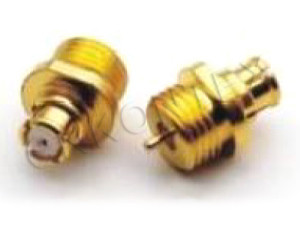
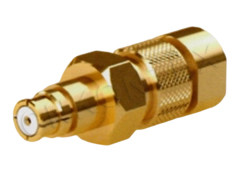
Gold over nickel is the default RF connector plating because it provides the best balance of corrosion resistance (gold), wear resistance (hard nickel underplate), low contact resistance, and reasonable cost. The nickel underplate provides hardness; the thin gold top layer prevents nickel oxidation and provides low contact resistance.
Gold over nickel plating structure:
|
Layer |
Material |
Typical thickness |
Function |
|
Top |
Gold |
10–30 μin (0.25–0.75 μm) |
Corrosion resistance, low contact resistance |
|
Underplate |
Nickel |
100–200 μin (2.5–5 μm) |
Hardness, barrier layer |
|
Base |
Brass (C36000) or beryllium copper |
n/a |
Mechanical structure |
The nickel underplate is critical: it prevents copper diffusion into the gold (which would form a tarnish layer) and provides the hardness that allows the gold to withstand mating cycles without wearing through.
When Should You Choose Silver Plating?
Silver plating is the right choice for low-loss, low-PIM, high-frequency applications where nickel is unacceptable, typically 5G base-station 7/16 DIN (L29) connectors, low-PIM N-Type, and high-frequency microwave connectors. Silver has the highest electrical conductivity of any metal, and being non-ferromagnetic, it does not cause PIM.
|
Silver plating advantage |
Mechanism |
|
Lowest loss |
106 % IACS conductivity (highest of any metal) |
|
Lowest PIM |
Non-ferromagnetic |
|
Good solderability |
Wets easily with tin-lead or lead-free solder |
|
Good conductivity at high frequency |
Lowest skin-effect loss |
Silver disadvantages:
Tarnishes over time (forms Ag2S in sulfur-containing atmosphere).
Softer than gold, less mating cycle durability.
More expensive than nickel.
Requires careful packaging to prevent tarnish during shipping.
For low-PIM 5G applications, silver or tri-metal (Cu-Sn-Zn) plating is mandatory for the entire signal path including the coupling nut and outer contact.
When Should You Choose Nickel Plating?
Nickel plating is the right choice for high-wear, low-cost, non-RF-critical applications where corrosion resistance and durability are paramount. Nickel is ferromagnetic and is not suitable for low-PIM or precision high-frequency RF.
|
Nickel plating advantage |
Mechanism |
|
Highest hardness |
Excellent wear resistance |
|
Highest corrosion resistance |
Forms passive NiO layer |
|
Lowest cost |
Standard plating chemistry |
|
High temperature resistance |
Stable up to 600 °C |
Nickel disadvantages:
Ferromagnetic → causes PIM
Highest electrical loss (~24 % IACS)
Difficult to solder (requires special flux)
Nickel-plated RF connectors are used for military / aerospace ground support equipment, low-frequency test fixtures, and cost-sensitive industrial applications where RF performance is secondary to durability.
What About Tri-Metal and Other Specialty Platings?
Tri-metal (Cu-Sn-Zn) plating and other specialty platings address the need for non-ferromagnetic, low-PIM, low-cost alternatives to silver for 5G base-station applications. Tri-metal is increasingly the standard for 7/16 DIN.
|
Plating |
Composition |
Conductivity |
PIM |
Cost |
Application |
|
Gold over nickel |
Au / Ni |
Good (Au) |
Good (with proper Ni control) |
Medium |
General-purpose |
|
Silver |
Ag |
Best |
Best |
High |
Low-PIM 5G, microwave |
|
Nickel |
Ni |
Poor (ferro) |
Poor |
Low |
High-wear, non-RF |
|
Tri-metal (Cu-Sn-Zn) |
Alloy |
Good |
Good |
Medium |
Low-PIM 5G (alternative to Ag) |
|
Tin |
Sn |
Good |
Poor (ferro) |
Low |
Low-frequency, low-cost |
|
Tin-lead (SnPb) |
SnPb |
Good |
Poor |
Medium |
Legacy aerospace |
|
Electroless nickel |
Ni-P (amorphous) |
Moderate |
Poor (ferro) |
Low |
Mechanical, non-RF |
Tri-metal is becoming the standard 5G base-station plating because it is non-ferromagnetic (no PIM), low-cost compared to silver, and provides good electrical performance.
How Does Plating Affect VSWR and Insertion Loss?
Plating affects VSWR and insertion loss primarily through the contact resistance of the mating interface and the skin-effect loss of the bulk conductor, with silver providing the lowest loss and nickel the highest. For high-precision VSWR applications (≤ 1.10), silver or gold over nickel is required.
|
Plating |
VSWR impact |
Insertion loss impact (typ., 18 GHz SMA) |
|
Silver |
Best |
≤ 0.10 dB |
|
Gold over nickel |
Good |
≤ 0.15 dB |
|
Tri-metal |
Good |
≤ 0.15 dB |
|
Nickel |
Poor (ferromagnetic) |
≤ 0.25 dB |
For VSWR ≤ 1.10 at 18 GHz (precision SMA), silver or precision gold over nickel is required. Nickel-plated connectors typically achieve VSWR ≤ 1.30 at 18 GHz.
How Does Plating Affect PIM?
PIM (Passive Intermodulation) is heavily affected by plating, with nickel and other ferromagnetic materials being the primary source of connector-generated PIM, and silver / gold / tri-metal providing excellent PIM performance. For 5G base-station applications, the entire signal path must be free of ferromagnetic materials.
|
Plating |
PIM (typ., 2 × 43 dBm) |
PIM source |
|
Silver |
−160 to −168 dBc |
None (non-ferro) |
|
Gold over nickel (controlled) |
−155 to −160 dBc |
Minimized by thin, controlled Ni underplate |
|
Tri-metal (Cu-Sn-Zn) |
−155 to −160 dBc |
None (non-ferro) |
|
Standard nickel |
−110 to −130 dBc |
Nickel (ferromagnetic) |
|
Tin or tin-lead |
−120 to −140 dBc |
Mild ferromagnetic content |
For LTE/5G base-station 7/16 DIN (L29), the typical PIM specification is ≤ −155 dBc, requiring silver or tri-metal plating throughout. Kontex's 7/16 DIN (L29) Series provides low-PIM versions with documented test reports.
What Are the Mating Cycle Effects?
Plating thickness and hardness determine the mating cycle durability, with gold over nickel typically rated to 500 cycles, silver to 100–250 cycles, and nickel to 1000+ cycles. The wear mechanism is gradual removal of the plating to expose the base metal.
|
Plating |
Typical mating cycle rating |
Wear mechanism |
|
Gold over nickel (30 μin Au) |
500 cycles |
Gradual gold wear, nickel exposed at end of life |
|
Silver (200 μin) |
100–250 cycles |
Silver wears off; base metal exposed |
|
Nickel (200 μin) |
1000+ cycles |
Very hard, minimal wear |
|
Tri-metal |
250–500 cycles |
Moderate hardness |
The mating cycle rating is the dominant wear mechanism for RF connectors. Connector life is essentially the life of the plating.
How Do You Specify Plating in a Drawing?
Plating is typically specified using a callout format that defines the underplate, top plating, thickness, and any special requirements (low-PIM, RoHS, etc.). Standard callouts follow AMS-QQ-N-290 (nickel), AMS-QQ-S-365 (silver), or MIL-G-45204 (gold).
|
Specification example |
Meaning |
|
Au 30 μin over Ni 200 μin over Cu |
Gold 30 microinches over nickel 200 microinches over copper flash |
|
Ag 200 μin over Cu |
Silver 200 microinches over copper flash (no nickel) |
|
Tri-metal (Cu-Sn-Zn) 200 μin |
Tri-metal 200 microinches directly on brass |
|
Ni 200 μin |
Nickel 200 microinches on brass (no top plate) |
|
Au 50 μin over Ni 200 μin |
Heavy gold for high-cycle applications |
RoHS / REACH compliance restricts the use of lead, cadmium, and certain other materials. Most modern RF connector platings are RoHS compliant.
What Are the Standard Specifications?
Standard RF connector plating specifications include MIL-G-45204 (gold), AMS-QQ-N-290 (nickel), AMS-QQ-S-365 (silver), and ASTM B700 (palladium). Each specification defines purity, thickness, adhesion, and corrosion resistance.
|
Specification |
Material |
Application |
|
MIL-G-45204 |
Gold |
Center contacts, signal path |
|
AMS-QQ-N-290 |
Nickel |
Underplate, corrosion resistance |
|
AMS-QQ-S-365 |
Silver |
Low-loss, low-PIM signal path |
|
ASTM B700 |
Palladium |
Specialty, low-PIM alternative to gold |
|
RoHS 2011/65/EU |
All |
Restricts hazardous substances |
|
REACH EC 1907/2006 |
All |
Chemical substances regulation |
For new designs, RoHS compliance is mandatory in the EU and most global markets. Kontex's connector families are RoHS compliant with documented material declarations.
What Are the Cost Trade-offs?
Plating cost varies significantly with material and thickness, with silver being the most expensive, gold over nickel medium, and nickel lowest. For volume production, the plating cost is typically a small fraction of the total connector cost.
|
Plating |
Cost per connector (relative) |
Notes |
|
Nickel |
1× |
Lowest |
|
Gold over nickel (30 μin) |
1.5–2× |
Standard |
|
Gold over nickel (50 μin, heavy) |
2–3× |
High-cycle |
|
Silver (200 μin) |
1.5–3× |
Cost varies with silver spot price |
|
Tri-metal |
1.3–2× |
Moderate |
|
Palladium |
5–10× |
Specialty |
For 5G base-station 7/16 DIN (L29), the silver or tri-metal plating is a small fraction of the total connector cost but is mandatory for PIM performance.
Frequently Asked Questions
Q: What is the best plating for an SMA connector?
A: For general-purpose SMA, gold over nickel (30 μin Au / 200 μin Ni) is the standard. For low-PIM or lowest-loss applications, silver or gold over controlled thin nickel is preferred.
Q: Why is silver better for low-PIM?
A: Silver is non-ferromagnetic, while nickel is ferromagnetic. PIM (passive intermodulation) is generated by ferromagnetic materials in the RF signal path, especially at connector interfaces with nonlinear contact resistance. Silver avoids this entirely.
Q: How long does silver plating last?
A: Silver plating does not "wear out" from mating cycles alone; it tarnishes (forms Ag2S) in sulfur-containing atmospheres, which increases contact resistance. For indoor applications, silver plating lasts indefinitely; for outdoor applications, gold over nickel is preferred.
Q: What is tri-metal plating?
A: Tri-metal plating is a copper-tin-zinc alloy (typically Cu-Sn-Zn) used as a non-ferromagnetic alternative to silver for low-PIM applications. Tri-metal is increasingly the standard for 5G base-station 7/16 DIN connectors.
Q: Can nickel be used for low-PIM?
A: No. Nickel is ferromagnetic and is a primary source of PIM. Low-PIM connectors must use silver, gold over controlled thin nickel, or tri-metal plating.
Q: Is gold necessary if I have a nickel underplate?
A: Yes. The gold top layer prevents nickel oxidation and provides the low contact resistance. Without gold, the nickel would oxidize and increase contact resistance over time.
Q: What is the typical gold plating thickness?
A: Standard gold plating is 30 μin (0.75 μm). Heavy gold is 50 μin (1.25 μm). Heavy gold is used for high-cycle (> 500 cycles) applications.
Q: Does Kontex offer custom plating?
A: Yes. Kontex offers custom plating options including heavy gold for high-cycle applications, silver for low-PIM, and tri-metal for 5G base-station. Contact the Kontex engineering team for custom plating requirements.
Q: Is RoHS compliance important?
A: Yes. RoHS compliance is mandatory for products sold in the EU and most global markets. Kontex's connector families are RoHS compliant with documented material declarations.
Conclusion
RF connector plating is a foundational design decision affecting electrical performance, mechanical durability, corrosion resistance, and PIM, with the three standard options (gold over nickel, silver, nickel) each providing a distinct profile. The choice depends on the application's priority: gold over nickel for general-purpose, silver or tri-metal for low-PIM 5G base-station, nickel for high-wear non-RF-critical applications. Kontex's SMA Series, BNC Series, and RF Adapter Series provide multiple plating options with documented test reports. For product range, certifications, and custom plating inquiries, consult the Field Application and About pages.