Detailed Explanation Of Microwave Devices: Definition, Classification, Functions, And Application Scenarios
Release time:2026-07-10
Visits:302
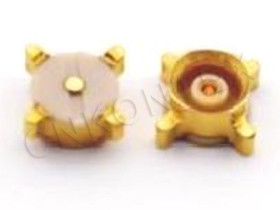
In the field of electronic technology, microwave devices are a category of key electronic components operating in the 300MHz to 300GHz microwave frequency band, serving as the foundation for constructing various microwave systems. From signal generation to transmission, amplification, and reception, microwave devices undertake the core links of microwave signal processing, and their performance directly affects the efficiency and reliability of various electronic equipment such as radar, communications, and electronic warfare.
I. Functional Classification of Microwave Devices: From Signal Processing to System Construction
Based on functional differences, microwave devices can be divided into several core types, each corresponding to a key step in the microwave signal chain:
- Microwave Oscillators (Microwave Sources): The signal source of the system, responsible for generating initial microwave signals, serving as the starting point of all microwave systems;
- Power Amplifiers: Amplify weak microwave signals to sufficient strength to meet the requirements of long-distance transmission or high-power applications (such as radar transmission);
- Mixers: Implement frequency conversion by mixing microwave signals with local oscillator signals to output signals of different frequencies (commonly used for down-conversion in receivers);
- Detectors: Convert high-frequency microwave signals into measurable DC or low-frequency signals for signal detection or demodulation;
- Microwave Antennas: Responsible for the spatial transmission and reception of microwave signals, acting as the interface for system interaction with the outside world;
- Microwave Transmission Lines: Used for directional transmission of microwave signals to ensure efficient signal transfer between devices.
By reasonably combining these devices, functional modules such as transmitters, receivers, antenna systems, and displays can be constructed, ultimately forming complete electronic equipment. For example, a radar system requires an oscillator to generate signals, an amplifier to enhance power, and an antenna to transmit/receive signals, while a communication system relies on mixers and detectors to signal modulation and demodulation.
II. Principle Classification of Microwave Devices: Differences from Materials to Processes
In addition to function, microwave devices can also be divided into four categories based on operating principles, materials, and processes, each with distinct characteristics and application scenarios:
1. Microwave Electron Vacuum Devices
These devices utilize the movement of electrons in a vacuum and their interaction with external circuits (such as acceleration by electric and magnetic fields) to oscillation, amplification, and other functions. Common types include klystrons, traveling wave tubes, magnetrons, and gyrotrons. The core advantages of such devices are high frequency and high power, enabling them to cope with scenarios with extremely high power requirements such as radar and high-power microwave weapons, but they are relatively large in size and power consumption.
2. Microwave Semiconductor Devices
Based on semiconductor materials (such as silicon and gallium arsenide), including microwave transistors (e.g., GaAs FET) and microwave diodes (e.g., Schottky diodes). They are characterized by small size, light weight, high reliability, and low power consumption, making them suitable for miniaturized and portable devices (such as mobile communication modules and small radars). However, in extremely high-frequency (e.g., above millimeter wave) or ultra-high-power scenarios, the performance of semiconductor devices is limited, and electron vacuum devices are still relied upon.
3. Microwave Integrated Circuits (Solid-State Devices)
Multiple
microwave functional circuits are integrated on gallium arsenide or other semiconductor chips through semiconductor processes to form miniaturized functional blocks (such as radio frequency front-end modules). The advantages of such devices are high integration and good consistency, which can significantly reduce system volume. They are widely used in fields with high miniaturization requirements such as solid-state phased array radar, electronic countermeasure equipment, missile electronic systems, and microwave communications, and are an important development direction of current microwave technology.
4. Microwave Power Modules
These modules adopt solid-state power combining technology to combine multiple small solid-state microwave power devices into a high-power module. They integrate the small size, light weight, and reliability of solid-state devices with the high power of electron vacuum devices, and have higher efficiency and more convenient use, serving as key devices promoting the all-solid-state transformation of radar, communication, and other equipment.
III. Core Position of Microwave Devices: From Equipment Heart to Technological Evolution
Among all microwave devices, the microwave oscillator (microwave source) holds a particularly prominent position—it is known as the heart of the microwave system, and its performance directly determines the core indicators of electronic equipment:
- In high-power microwave weapons, the output power of the oscillator determines the weapon's kill range and effectiveness;
- In radar systems, the frequency stability and power of the oscillator determine the radar's detection range, resolution, and anti-interference capability;
- In communication systems, the phase noise of the oscillator affects the signal transmission quality and link stability.
As electronic equipment develops towards high performance, miniaturization, and low power consumption, the evolution trend of microwave devices becomes increasingly clear: future efforts will focus on breaking through key technologies such as high power, high efficiency, miniaturization, low power consumption, and low cost. For example, microwave oscillators will pay more attention to high power output in small volume, and microwave integrated circuits will upgrade to more advanced semiconductor processes (such as gallium nitride) to meet the needs of emerging fields such as 5G communications, phased array radar, and unmanned aerial vehicles.
Conclusion
Although microwave devices are small, they are the underlying cornerstone of electronic technology. From national defense equipment to civil communications, from radar detection to 5G base stations, every microwave system relies on the support of microwave devices. With the continuous advancement of technology, microwave devices will continue to play the role of technology innovators, driving electronic equipment towards more efficient and intelligent development.