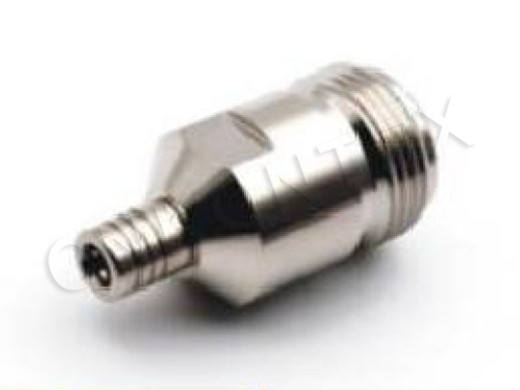
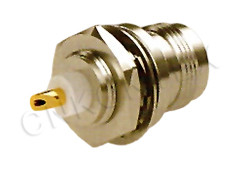
TNC Connector Detailed Explanation: A Stable Connection Solution For High-Frequency Devices
Release time:2026-05-15
Visits:349
In the field of high-frequency electronic devices, connection stability directly determines the quality of signal transmission—vibrations easily cause interface loosening, and high-frequency leakage can interfere with signal integrity. These pain points have long troubled device manufacturers and users. The TNC connector (short for Threaded Neill-Concelman, i.e., Threaded Coaxial Connector) was born to solve these problems. With its unique design and excellent performance, it has become a reliable cornerstone for coaxial cable connections.
I. What is a TNC Connector?
TNC is a radio frequency connector specially designed for coaxial cables, with its core positioning as stable connection in high-frequency scenarios. The Threaded in its name is the key design feature—unlike the bayonet structure of traditional BNC connectors, TNC adopts a threaded coupling method, achieving tight interface bonding through rotational locking, which fundamentally solves the problem of loosening caused by vibrations.
II. Core Advantages of TNC Connectors: Why Choose It?
TNC has become a hot commodity in the high-frequency field due to its precise design targeting pain points:
1. Anti-vibration and More Secure: The biting force of threaded connection far exceeds that of bayonet type, ensuring stable interface and avoiding signal interruption even in vibrating environments such as mobile radios and outdoor radars;
2. Low Leakage, Signal Protection: The threaded sealing structure significantly reduces high-frequency signal leakage, minimizes external interference, and ensures the purity of signal transmission (which is crucial for scenarios with high requirements for signal integrity such as radars and testing equipment);
3. Balanced Compatibility and Performance: It inherits the excellent electrical and mechanical performance of the BNC series, and at the same time upgrades reliability through threaded design, perfectly balancing compatibility and stability.
III. TNC Performance: Tailored for High-Frequency Scenarios
Although there is no need to list rigid parameters, the performance advantages of TNC can be transformed into user-perceivable value:
- Efficient Signal Transmission: 50Ω characteristic impedance perfectly matches coaxial cables, avoiding signal reflection and improving transmission efficiency;
- Strong Environmental Adaptability: Operating temperature ranges from -55℃ to +85℃, capable of coping with extreme scenarios such as low temperatures of outdoor base stations and high temperatures in laboratories;
- Low Loss and High Reliability: High insulation resistance (reducing leakage) + low contact resistance (reducing signal loss), enabling high-frequency signals to be transmitted intact;
- Purer Signal: Low Voltage Standing Wave Ratio (VSWR) design ensures the integrity of high-frequency signals, which can work stably even in the 2000MHz frequency band.
IV. Typical Application Scenarios of TNC Connectors
The advantages of TNC just match the core needs of high-frequency devices, so it is widely used in the following fields:
- Radio Equipment: Mobile devices such as walkie-talkies and amateur radios, with anti-vibration design to avoid call interruption;
- Radar Systems: Outdoor weather radars and vehicle-mounted radars, with firm connections to cope with wind and vibration, ensuring stable detection signals;
- Testing Equipment: Laboratory instruments such as spectrum analyzers and network analyzers, with low leakage characteristics to ensure accurate test data;
- Communication Systems: Base stations and satellite communication equipment, stably transmitting high-frequency signals to support network coverage;
- Laboratory Equipment: Scientific research high-frequency experimental devices, with wide temperature range to adapt to different experimental environments.
V. Summary: TNC is a Reliable Choice for High-Frequency Connections
From design logic to actual performance,
TNC connectors always focus on stability and reliability—threaded coupling solves the pain point of vibration loosening, low leakage characteristics ensure signal quality, and wide environmental adaptability covers multi-scenario needs. Whether for professional equipment manufacturers (such as radar and communication equipment factories) or end users (such as laboratories and radio enthusiasts), TNC is the best choice for high-frequency coaxial connections.
If you are looking for a stable connection solution for high-frequency devices, TNC connectors, with their characteristics of anti-vibration, low leakage, and easy compatibility, can fully meet your needs—it is not the most fancy choice, but the most stable choice.