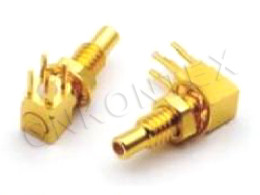
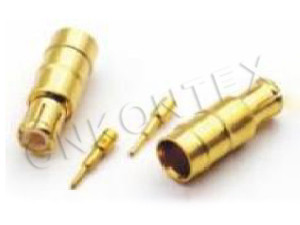
What Is An MCX Connector? A Comprehensive Analysis Of The Features And Applications Of Ultra-Miniature RF Coaxial Connectors
Release time:2026-06-01
Visits:261
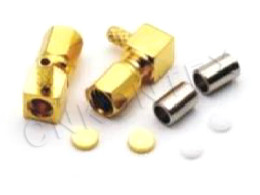
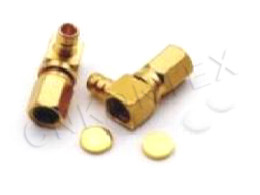
In the field of RF communication and miniaturized electronic devices, MCX connectors are a typical representative of ultra-miniature RF coaxial connectors—featuring a push-on coupling structure as their core design, they not only ensure the stability of high-frequency signal transmission but also enable reliable connections in extremely small spaces, serving as a key component that balances size and performance.
I. Basic Understanding of MCX Connectors: Core Attributes of Ultra-Miniature Design
The essence of MCX connectors is a miniaturized connection solution designed for high-frequency RF signals:
- Impedance Matching: Supports two common impedance types, 50Ω (commonly used in wireless communication and radar) and 75Ω (mostly used for video and satellite signals), adapting to signal transmission requirements in different scenarios;
- High-Frequency Capability: Operates at frequencies up to 6GHz, enabling stable transmission of high-speed data signals;
- Cable Compatibility: Compatible with various RF cables such as semi-rigid and flexible cables, meeting connection needs both inside and outside devices;
- Coupling Method: Push-on structure eliminates the need for rotational, allowing for easy plugging and unplugging while saving space, making it particularly suitable for frequent operations or installation in tight spaces.
II. Four Core Advantages of MCX Connectors: Why They Are the Preferred Choice for Miniaturized Scenarios?
MCX connectors stand out among numerous RF connectors due to their four design features tailored to miniaturization needs:
1. Compact Size, Adaptable to Space-Constrained Scenarios
The ultra-miniature size of
MCX connectors (much smaller than traditional SMA and BNC connectors) allows them to be embedded in space-constrained devices—such as small drones, portable medical equipment, and 5G terminals—solving the pain point of large connectors not fitting into small devices.
2. High-Frequency Support, Meeting High-Speed Data Transmission
The 6GHz operating frequency covers the core needs of modern electronic devices: from high-speed signals in 5G base stations to pulse transmission in radar, MCX connectors maintain signal integrity, avoiding attenuation or interference at high frequencies, and serve as the fundamental guarantee for high-speed data transmission.
3. Flexible Installation, Adapting to Diverse Designs
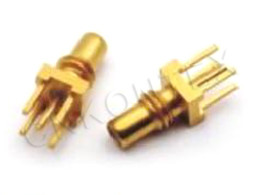
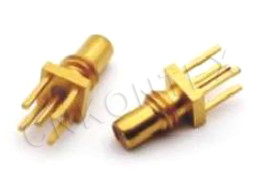
Supports various installation methods such as through-hole, surface mount, hybrid technology, or edge mount, matching the design requirements of different PCBs (Printed Circuit Boards)—whether through-hole mounting for vertical connections or surface mount for thin and light designs, MCX can seamlessly integrate.
4. Non-Magnetic Options, Covering Sensitive Fields
Some MCX connectors can be manufactured with non-magnetic materials, completely avoiding magnetic interference with signals or devices, thus safely applicable in medical electronics (e.g., MRI equipment) and aerospace (airborne systems) and other magnetically sensitive scenarios, ensuring device accuracy and safety.
III. Application Scenarios of MCX Connectors: Comprehensive Coverage from Wireless Communication to Medical Fields
The value of MCX connectors lies in their ability to address the combined demand for miniaturization + high-frequency transmission, with applications penetrating multiple key industries:
1. Wireless Communication and 5G
In 5G base stations, routers, wireless APs, and other devices, MCX connectors are used for the last mile transmission of internal high-frequency signals—such as connecting wireless modules to motherboards, supporting the core experience of 5G high-speed internet access and low latency.
2. Aviation and Satellite Communication
In scenarios where space is at a premium such as airborne communication equipment and satellite receivers, the small size and high-frequency performance of MCX connectors become core advantages, ensuring stable transmission of airborne radar and satellite signals.
3. Medical Electronics
Medical devices such as ultrasonic diagnostic instruments and RF therapy devices require interference-free high-frequency signals. Non-magnetic MCX connectors can avoid magnetic field interference with diagnostic results, serving as an invisible precision guarantee in medical equipment.
4. Testing and Consumer Electronics
- Testing Equipment: In test instruments such as software-defined oscilloscopes and signal generators, MCX connectors are used to connect probes to devices, enabling accurate high-frequency signal collection;
- Consumer Electronics: In wireless modules of computer towers, GPS terminals, and IoT devices (e.g., smart sensors), MCX connectors handle internal signal routing, supporting the wireless functions of the devices.
5. Automotive and IoT
In in-vehicle 5G modules, millimeter-wave radars for autonomous driving, and wireless communication systems in smart cars, the miniaturized design of MCX connectors can adapt to the complex spatial layout inside automobiles, ensuring stable transmission of in-vehicle signals.
Conclusion: MCX Connectors—The Invisible Connector for Miniaturized Electronic Devices
As a representative of ultra-miniature RF connectors, the core value of MCX connectors lies in carrying the highest performance in the smallest size: they not only solve the space problem of modern electronic devices getting smaller and smaller but also meet the demand for high-speed signals from technologies such as 5G and IoT, serving as an invisible connection bridge in industries like wireless communication, medical, and aerospace.
For scenarios requiring miniaturized high-frequency connections, MCX connectors are not an optional solution but a must-have solution—they balance all contradictions through design, allowing small devices to also possess strong performance.