Fiber Optic Devices: A Comprehensive Analysis Of Principles, Types, Applications, And Future Developments
Release time:2026-07-24
Visits:259
In the era of high-speed communication and digital technology, fiber optic devices serve as the invisible cornerstone supporting data transmission. From the telecom networks enabling mobile phone calls to hospital endoscopes, from server connections in data centers to laser processing equipment in factories, they act like digital nerves, silently carrying massive data transmission and profoundly impacting every corner of modern life. This article will comprehensively dissect the true nature of fiber optic devices, covering working principles, common types, practical applications, market trends, and future directions, helping you understand this communication hero hidden within optical cables.
I. Core Principle of Fiber Optic Devices: The Magic of Total Internal Reflection
Fiber optic devices can transmit optical signals by relying on the physical phenomenon of Total Internal Reflection—a key feature that distinguishes them from traditional cables.
Simply put, the structure of an optical fiber resembles a double-layer straw: the inner layer is the core (used to transmit optical signals), and the outer layer is the cladding (protects the core and guides the light path). The refractive index of the core (the reciprocal of the speed of light in the medium) is higher than that of the cladding. When light enters the core at an angle greater than the critical angle, it continuously reflects at the interface between the core and cladding, propagating along the fiber without escaping, much like a small ball rolling along a pipe. This self-confining characteristic allows optical signals to be transmitted over long distances with low loss, making it an ideal choice for high-speed communication.
II. Common Types of Fiber Optic Devices: Communication Components with Distinct Roles
Based on functions and application scenarios, fiber optic devices can be divided into 5 categories, each serving as a key player in optical communication links:
1. Transceivers: Translators Between Electricity and Light
The core task of transceivers is signal conversion: the transmitter converts electrical signals (such as digital data in a computer) into optical signals for transmission in optical fibers; the receiver converts optical signals back into electrical signals, enabling terminal devices (such as mobile phones and servers) to understand them. Without transceivers, electrical and optical signals cannot communicate.
2. Connectors: Wiring Plugs for Optical Fibers
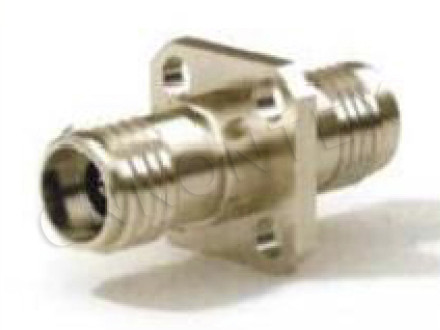
When two optical fibers need to be connected, connectors come into play. They precisely align the cores of two fibers to ensure seamless relay of optical signals—much like a power plug connecting two wires, but with higher precision (errors must be controlled at the micrometer level). Common applications include server connections in data centers and fiber-to-the-home for residential broadband.
3. Amplifiers: Energy Supply Stations for Optical Signals
During transmission in optical fibers, optical signals weaken due to fiber losses (such as material absorption and scattering). The role of amplifiers is to enhance the intensity of optical signals, allowing them to travel longer distances (such as intercity and transoceanic optical cables). Without amplifiers, optical signals might disappear after traveling just a few dozen kilometers.
4. Filters: Cleaning Guards for Signals
In complex communication environments, there are various stray optical signals (such as interference of different wavelengths). Filters act like signal sieves, allowing only specific wavelengths of optical signals to pass while blocking interfering signals. They ensure the transmitted optical signals are pure, preventing data errors—for example, in fiber optic TV, filters eliminate noise for clearer images.
5. Wavelength Division Multiplexers/Demultiplexers: Capacity Expansion Tools for Optical Fibers
How much signal can a single optical fiber carry? Wavelength Division Multiplexing (WDM) technology provides the answer: transmitting multiple optical signals of different wavelengths in the same fiber. Multiplexers merge multiple signals into one fiber, while demultiplexers separate them—equivalent to converting a single-lane road into a multi-lane highway, greatly improving fiber utilization. This technology is widely used in telecom backbone networks and high-speed links in data centers.
III. Applications of Fiber Optic Devices: Invisible Helpers Penetrating Daily Life
Fiber optic devices are not lab toys; they have deeply integrated into our daily lives. Here are typical scenarios:
1. Data Centers: Blood Vessels of the Digital World
Data centers are warehouses for storing and processing massive data, and
fiber optic devices are the blood vessels connecting servers, switches, and storage equipment. For example, when you watch short videos on your phone, video data travels from data center servers through fiber optic devices to base stations and then to your phone—with transceivers, connectors, and amplifiers working silently throughout.
2. Telecom Networks: The Backbone of Global Communication
From 4G to 5G, from fixed broadband to mobile networks, telecom operators' core networks rely entirely on fiber optic devices. For instance, in intercity optical cable lines, amplifiers recharge signals every few dozen kilometers to prevent attenuation; wavelength division multiplexers enable a single optical cable to transmit millions of telephone calls, videos, and internet data simultaneously.
3. Medical Equipment: Eyes for Precision Diagnosis and Treatment
In the medical field, fiber optic devices are key to minimally invasive technology. For example, endoscopes: optical fibers transmit internal body images to external displays, allowing doctors to examine the stomach and intestines without surgery; laser surgical equipment: optical fibers guide lasers to precisely target lesions (such as corneal cutting in ophthalmic surgery), reducing trauma.
4. Laser Processing: Precision Tools for Industrial Manufacturing
In automotive, electronics, aerospace, and other industries, laser cutting, welding, and marking have become mainstream technologies, with fiber optic devices as the core components of laser equipment. For example, fiber optic devices in fiber lasers guide laser beams to precisely cut thin metal sheets (with errors less than 0.1 mm) or mark chips—precision unattainable by traditional mechanical processing.
5. Aerospace: Reliable Communicators in Extreme Environments
The aerospace sector has high requirements for devices (such as vibration resistance, high-temperature tolerance, and electromagnetic interference resistance), which fiber optic devices just meet. For instance, in aircraft navigation systems, fiber optic sensors accurately measure flight attitude; in satellite communications, fiber optic devices transmit high-speed data—they are lighter and more stable than traditional metal cables, suitable for space environments.
IV. Fiber Optic Devices Market: A Fast-Growing Golden Track
The global fiber optic devices market is in a period of rapid growth:
- Scale: It is projected to reach $65 billion by 2034, with an annual growth rate of approximately 9% (compound annual growth rate);
- Region: The Asia-Pacific region is the leader, accounting for over 45% of the global market share by 2025 (driven by 5G popularization and data center construction in China, India, and other countries);
- Growth Drivers:
1. Demand-Driven: The popularity of high-speed internet and the Internet of Things (IoT) increases requirements for data transmission speed and capacity;
2. Consumer Electronics: The popularity of smart homes (e.g., smart speakers, surveillance cameras) and VR/AR devices demands more fiber optic devices for connectivity;
3. Technological Upgrades: The development of new technologies such as 5G, cloud computing, and artificial intelligence has spurred demand for high-performance fiber optic devices (e.g., 5G base stations require more transceivers and amplifiers).
V. Future of Fiber Optic Devices: More Efficient, Intelligent Evolution Directions
With technological advancements, the future of fiber optic devices will move toward low cost, high integration, and high speed. Here are key trends:
1. Silicon Photonics: A Cheaper Integration Solution
Traditional fiber optic devices mostly use crystal (quartz) materials, which are costly and difficult to integrate. Silicon photonics uses silicon materials—the core material of chips—to manufacture devices. Silicon is low-cost, easy to process, and can integrate multiple devices (such as transceivers and filters) into a single silicon chip, making it as compact as a computer chip. This will make fiber optic devices cheaper and more compact, suitable for large-scale applications (e.g., smartphones, IoT devices).
2. Coherent Optics: More Stable High-Speed Transmission
Coherent optical technology uses coherent light sources (such as lasers) instead of traditional incoherent light sources, enabling optical signals to carry more information (e.g., phase, polarization), thereby increasing transmission rate and distance. For example, traditional optical communication rates are 10 Gbps, while coherent optical communication can reach 100 Gbps or higher—critical for high-speed applications like 5G and cloud computing.