Introduction To RF Connectors: Functions, Types, And Selection Criteria
Release time:2026-04-27
Visits:285
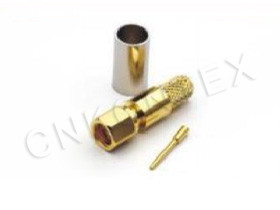
In wireless communication, electronic devices, and RF testing scenarios, RF connectors (also known as RF terminals) are the invisible critical components that ensure stable transmission of high-frequency signals. They are a type of electronic connector specifically designed for radio frequencies in the megahertz range, with the core function of establishing an interference-free signal channel between coaxial cables and devices, or between coaxial cables themselves. This requires not only preserving the shielding advantages of coaxial cables (to prevent external interference or signal leakage) but also minimizing impedance changes at the connection point (to avoid signal reflection and attenuation).
Core Value of RF Connectors: More Than Just Connection
Unlike ordinary electronic connectors, the design of RF connectors revolves around high-frequency signal integrity:
- Shielding Continuity: Coaxial cables rely on outer metal shielding layers to isolate interference. RF connectors must perfectly match the cable's shielding structure (e.g., a metal shell completely enclosing the signal pin) to prevent connections from becoming signal leakage vulnerabilities;
- Impedance Consistency: High-quality RF connectors minimize impedance fluctuations at the connection (typically maintaining standard impedances of 50Ω or 75Ω), ensuring signals pass smoothly without loss due to sudden impedance changes;
- Mechanical Reliability: To adapt to different scenarios, RF connectors feature various fastening structures (threaded, bayonet, blind-mate, etc.). For example, threaded types (e.g., N-type) are suitable for outdoor high-vibration environments, while bayonet types (e.g., BNC) are ideal for frequently ged testing scenarios. Spring-loaded contact designs ensure low-ohm conductivity while reducing insertion force and extending plug life (resisting loosening or oxidation even with repeated use).
Common RF Connector Types and Typical Applications
RF connectors come in numerous types, each corresponding to specific frequency ranges, sizes, and weather resistance. Below are the most commonly used types and their applicable scenarios:
1. N-type Connector: Suitable for outdoor or industrial-grade scenarios (e.g., base stations, microwave communications, satellite equipment). Features strong weather resistance, excellent shielding, and supports frequencies up to 11GHz;
2. SMA Connector: The mainstream choice for household and small devices (e.g., routers, wireless network cards, drones). Compact, reliable threaded fastening, supports frequencies up to 18GHz;
3. BNC Connector: A regular in test and measurement equipment (e.g., oscilloscopes, signal generators, surveillance cameras). Bayonet design enables quick plugging/unplugging, ideal for scenarios requiring frequent connections;
4. TNC Connector: Optimized for vibration resistance over BNC (e.g., car navigation, outdoor monitoring equipment). More robust bayonet structure prevents due to vibration;
5. U.FL/MMCX Connector: Miniature connectors designed for small-sized devices like mobile phones, tablets, and smartwatches. Only a few millimeters in size, supports high-frequency signal transmission;
6. FAKRA Connector: Specialized for the automotive industry (e.g., in-vehicle radar, car infotainment systems). Offers outstanding temperature and vibration resistance, with color-coding for different functions (e.g., audio, navigation).
How to Choose the Right RF Connector? Focus on 3 Key Points
The core logic for selecting an RF connector is to match the usage scenario and requirements, with emphasis on the following dimensions:
1. Scenario Adaptation: Use weather-resistant N-type for outdoor environments, easy-to-plug BNC for indoor testing, and mini U.FL for small devices;
2. Frequency Coverage: Ensure the connector's maximum supported frequency exceeds your signal frequency (e.g., 5G devices may require SMA connectors supporting 28GHz or higher);
3. Durability Requirements: If frequent plugging/unplugging is needed (e.g., test equipment), prioritize connectors with spring contact designs (e.g., SMA, BNC). For outdoor vibrating environments, choose threaded or bayonet-fastened types (e.g., N-type, TNC).
Conclusion: Small Connector, Big Impact
Although seemingly unremarkable, RF connectors directly determine the performance ceiling of RF systems. For instance, using the wrong connector in a router may lead to weak Wi-Fi signals, while incorrect selection in a base station could cause communication outages. By focusing on the three core factors—scenario, frequency, and durability—you can find the most suitable RF connector, ensuring high-frequency signals remain stable as a rock.
Whether for household devices, industrial base stations, or automotive electronics, choosing the right RF connector is like adding insurance to signal transmission.