Detailed Explanation Of Miniature RF Connectors: Types, Applications, And Selection Tips
Release time:2026-05-01
Visits:399
In fields such as wireless communication, radar, satellite communication, or test and measurement, the stable transmission of high-frequency signals is inseparable from miniature RF connectors—these small-sized, reliable components are becoming the signal bridges in space-constrained devices. Their core advantages are clear: small size (adapting to the internal space of small devices), light weight (reducing the burden of portable devices), and good high-frequency characteristics (avoiding signal attenuation or interference), perfectly solving the pain point of transmitting high-frequency signals in small spaces.
I. Core Value of Miniature RF Connectors
High-frequency signal transmission has extremely high requirements for connectors: they must be small enough to fit into the casings of mobile phones, tablets, or small radars, and stable enough to ensure no signal loss. Miniature RF connectors exactly fill this gap—they enable smart devices, communication base stations, or test instruments to achieve efficient high-frequency signal transmission in limited spaces, and are a key support for the miniaturization + high performance of modern electronic devices.
II. Common Types and Applications of Miniature RF Connectors
Different types of miniature RF connectors have different emphases in size, connection methods, and applicable scenarios. The following are 8 most commonly used types and their typical applications:
1. SMA Connector
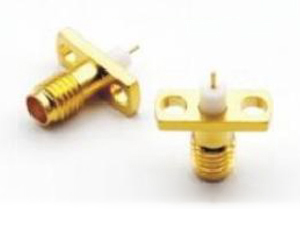
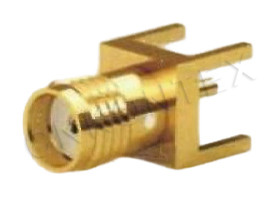
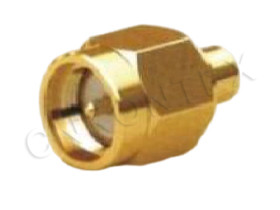
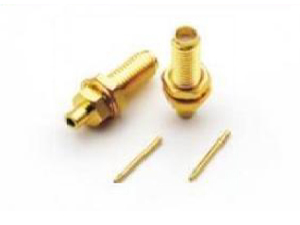
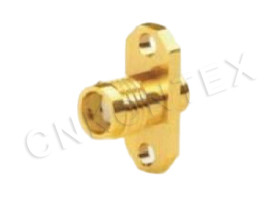
As the most popular miniature
RF connector, it is characterized by strong versatility and is suitable for scenarios requiring high-frequency transmission (such as radar and base station equipment). Whether in wireless communication or test and measurement, as long as high-frequency signals are involved, SMA is the default choice.
2. SMB Connector
The combination of ultra-small design and low insertion loss makes it the first choice for microwave circuits. For example, in RF modules or small communication devices, SMB can save more space while ensuring signal quality.
3. SMC Connector
If a threaded connector smaller than SMA is needed, SMC is an ideal option. Its threaded structure provides a more secure connection, suitable for small devices with high reliability requirements (such as industrial sensors).
4. U.FL Connector
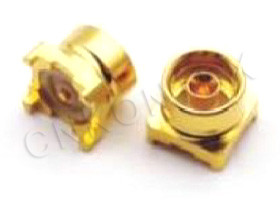
A miniature connector specially designed for consumer electronics such as mobile phones and tablets, it is extremely small in size and can be easily embedded into the interior of compact devices. It can be found in the wireless modules of smart phones and the GPS antennas of tablets.
5. MMCX Connector
Balancing miniaturization and flexibility, it is widely used in portable test instruments or medical devices. For example, handheld spectrum analyzers or small monitors, MMCX can achieve quick connection without taking up space.
6. BNC Connector
With quick plugging and unplugging as its core advantage, it is suitable for scenarios requiring frequent connection/disconnection (such as laboratory test instruments). For example, oscilloscopes, signal generators and other equipment, BNC's snap-on design can improve operation efficiency.
7. MCX Connector
The characteristics of miniaturization and adaptation to wireless communication make it commonly used in portable wireless devices (such as walkie-talkies, small base stations). Its size is smaller than BNC, suitable for wireless systems sensitive to space.
8. FME Connector
With excellent high-frequency performance, it is the savior for extremely space-constrained scenarios. For example, satellite communication terminals or small radars, FME can achieve stable high-frequency signal transmission in a very small space.
III. How to Select the Appropriate Miniature RF Connector?
Choosing the right connector can ensure the stability of signal transmission. The following 4 dimensions are key:
1. Consider Space Constraints
If the internal space of the device is extremely small (such as a mobile phone), prioritize U.FL or MMCX; if the space is slightly larger but requires a stable connection, choose SMA or SMC.
2. Consider Frequency Requirements
For high-frequency transmission (such as above 20GHz), choose U.FL, FME, or SMA; for medium and low-frequency scenarios (such as below 4GHz), BNC or MCX are more suitable.
3. Consider Connection Frequency
If frequent plugging and unplugging is required (such as test instruments), choose BNC (snap-on type); if long-term stable connection is needed (such as base station equipment), choose SMA or SMC (threaded type).
4. Consider Device Type
For consumer electronics (mobile phones, tablets), choose U.FL; for portable instruments, choose MMCX; for industrial equipment, choose SMC; for communication base stations, choose SMA.
Conclusion
Although miniature RF connectors are small, they are the key nodes of high-frequency signal transmission. Choosing the right type can allow the device to exert high performance in a small space; choosing the wrong one may lead to problems such as signal attenuation and unstable connection. Remember: select based on application scenarios, frequency requirements, and connection methods, and you can find the most suitable one.
Whether it is mobile phone manufacturers, communication equipment suppliers, or test instrument manufacturers, mastering the selection skills of miniature RF connectors is an important step to improve product reliability.