What Is A Microwave Coaxial Connector? A Complete Guide To Types And Selection
Release time:2026-05-04
Visits:345
In high-tech fields such as radar, communications, electronic countermeasures, and remote sensing, stable signal transmission is the core of a system's functionality—and the invisible hero that achieves this is the microwave coaxial connector. Like a high-frequency signal bridge, it specifically connects coaxial cables to electronic devices, ensuring that signals in the microwave frequency band are transmitted without attenuation or interference. It directly affects the detection accuracy of radar, the quality of communication links, and even the response speed of electronic countermeasure systems.
I. Microwave Coaxial Connector: The Signal Transmission Core in High-Frequency Scenarios
A
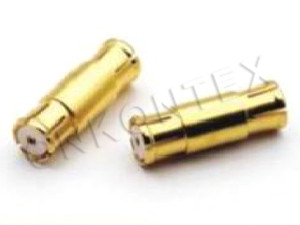
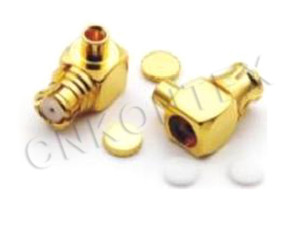
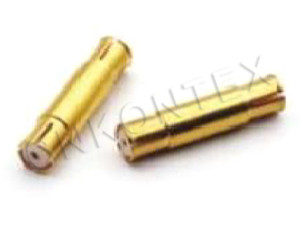
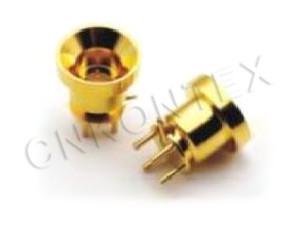
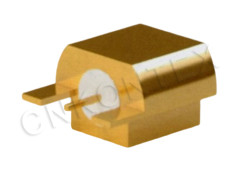
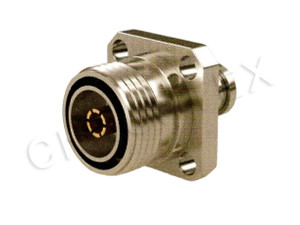
microwave coaxial connector is a connecting component designed specifically for the microwave frequency band (typically 300MHz to 300GHz). Unlike ordinary connectors, it emphasizes signal integrity in high-frequency environments. Whether it is a ground station for satellite communications, a radar system of a fighter jet, or a signal link of a remote sensing satellite, it is needed to complete the last mile of signal connection—without high-quality microwave coaxial connectors, even the most advanced equipment may fail due to signal loss.
II. Common Types of Microwave Coaxial Connectors and Their Application Scenarios
There are many types of microwave coaxial connectors on the market, with different types corresponding to different usage requirements. The following are the 7 most commonly used types and their core characteristics:
1. SMA Connector: The most popular general-purpose choice, suitable for non-frequent plugging/unplugging scenarios (such as connections between fixed devices). It has strong compatibility and is the first choice for entry-level or general scenarios.
2. N-Type Connector: A classic durable model. Although its upper frequency limit is lower (suitable for scenarios below 4GHz), it is wear-resistant and vibration-resistant, and is often used in outdoor communication equipment or industrial sites.
3. 3.5mm Connector: Known for high reliability, suitable for scenarios requiring repeated plugging/unplugging (such as laboratory test equipment, communication links that are frequently调试ed). It can maintain stable performance after multiple plugging/unplugging operations.
4. K-Type Connector (2.92mm): With excellent electrical performance, it supports a higher frequency range and is compatible with SMA connectors—if your system already has an SMA interface, it can be directly adapted, eliminating the need to replace the interface.
5. 2.4mm Connector: With high mechanical strength and strong shock and vibration resistance, it is suitable for harsh environments (such as outdoor radar, industrial robots) and can support higher frequencies.
6. 1.85mm Connector: Small in size and strong in high-frequency performance, suitable for space-constrained scenarios (such as small satellite communication equipment, portable remote sensing instruments), and can support high-frequency signals above 65GHz.
7. 1.0mm Connector: An expert for extremely high frequencies, specially designed for ultra-high frequency scenarios above 100GHz (such as terahertz radar, quantum communication experiments). It is the first choice for scientific research or military scenarios with extreme frequency requirements.
III. How to Choose the Right Microwave Coaxial Connector?
The core logic for choosing a microwave coaxial connector is matching requirements, with focus on the following 5 points:
1. Frequency Range: First, Check Whether It Can Cover Your Scenario
- Low-frequency scenarios (<4GHz): Choose N-type connectors;
- Medium and high-frequency scenarios (4GHz~50GHz): Choose SMA, 3.5mm, or K-type;
- Ultra-high frequency scenarios (>50GHz): Choose 1.85mm or 1.0mm.
Key Reminder: If the upper frequency limit of the connector is lower than your system frequency, it will cause severe signal attenuation or even failure to transmit.
2. Impedance: Must Match Completely
Common impedances in microwave systems are 50Ω (mostly used in communications, radar) and 75Ω (mostly used in broadcast television, remote sensing). Impedance mismatch will cause signal reflection and increased loss—for example, using a 50Ω connector with a 75Ω cable may result in a signal attenuation of more than 30%.
3. Mechanical Performance: Adapt to Your Usage Scenario
- Space Constraints: If the internal space of the device is small (such as small drones, portable instruments), choose small-sized types like 1.85mm or 1.0mm;
- Plugging/Unplugging Frequency: For scenarios with frequent plugging/unplugging (such as laboratory testing), choose 3.5mm; for fixed installation scenarios, choose SMA or N-type;
- Weight Requirements: For portable devices, choose lightweight designed connectors (such as 1.85mm).
4. Electrical Performance: Focus on Core Indicators of Signal Quality
- Insertion Loss: The smaller the better (usually required to be <0.3dB), indicating less signal attenuation;
- Return Loss: The larger the absolute value, the better (usually required to be >20dB), indicating less signal reflection;
- Isolation: The higher the better, indicating strong anti-interference ability (suitable for complex scenarios such as electronic countermeasures).
5. Environmental Adaptability: Coping with Extreme Scenarios
- If used in high-temperature/low-temperature environments (such as deserts or polar regions): Choose temperature-resistant models that can withstand -40℃~+85℃;
- If used in high-vibration scenarios (such as aircraft, automobiles): Choose connectors with high vibration resistance (such as N-type, 2.4mm).
IV. Pit Avoidance Suggestions for Purchasing Microwave Coaxial Connectors
Finally, a reminder: Do not choose inferior products for the sake of cheapness. The quality of microwave coaxial connectors directly affects signal quality—inferior connectors may cause signal attenuation due to poor contact, or even disconnection in extreme environments due to material aging.
Prioritize suppliers with good reputation and ensure that the connectors comply with industry standards (such as IEC, GB). Even if the price is slightly higher, it can avoid subsequent maintenance costs.
In short, although microwave coaxial connectors are small, they are the key nodes in high-frequency scenarios. Choosing the right type and matching the requirements can make your high-tech equipment perform at its best—remember: the one that suits your scenario is the best.