Comprehensive Analysis Of N-Type Connectors: Features, Specifications, And Application Scenarios
Release time:2026-05-08
Visits:318
In the field of radio frequency (RF) and microwave technology, the N-type connector is a basic component that combines reliability and cost-effectiveness. From early military communications to today's civilian wireless systems, it has become synonymous with stable connection in numerous scenarios due to its unique design advantages. This article will comprehensively dissect the value of N-type connectors, from basic understanding and core specifications to practical applications.
I. Fundamentals of N-Type Connectors: Design and Origin
The
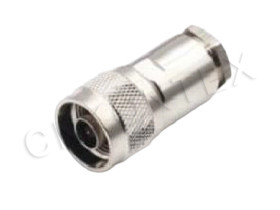
N-type connector was invented by Paul Neill in the 1940s, initially to meet the stringent requirements of military applications—it needed to stably transmit microwave signals in complex environments while waterproof and anti-vibration capabilities. Its core design highlight is the threaded connection structure: this design not only provides a secure mechanical fixation but also effectively seals the interface, preventing moisture and dust intrusion, making it suitable for outdoor or harsh environments.
As a medium-power connector, the N-type connector balances structural compactness and power transmission capability, becoming a standard configuration for early military communication systems before gradually gaining popularity in the civilian sector.
II. Core Specifications of N-Type Connectors: Key Parameters You Need to Know
The versatility of N-type connectors stems from their clear specification divisions. Here are the three most core parameters:
1. Dimensions: The male (plug) has a diameter of approximately 2.03 cm (0.80 inches), and the female (socket) has a diameter of approximately 1.57 cm (0.62 inches)—this size design balances portability and connection stability.
2. Frequency Range: The standard operating range is 0–11 GHz, with some optimized models extending up to 18 GHz, covering microwave signal transmission needs from low to medium frequencies.
3. Impedance Versions: In accordance with MIL-STD-348 standards, there are two options: 50Ω and 75Ω:
- 50Ω version: Suitable for land mobile communications, wireless data, paging systems, and cellular networks, making it the general-purpose choice;
- 75Ω version: Mainly adapted for cable television systems, more suitable for low-loss signal transmission scenarios.
III. Performance of N-Type Connectors: Why It's Stable?
The power performance of N-type connectors is one of their core advantages:
- Peak Power: Determined by the voltage breakdown limit of the air gap around the center pin—the larger the air gap, the higher the peak power it can withstand;
- Average Power: Determined by the resistive insertion loss of the center contact—the better the conductivity of the contact, the smaller the power loss and the higher the transmission efficiency.
This performance characteristic makes N-type connectors particularly suitable for low-frequency microwave systems requiring ruggedness + low cost, such as spectrum analyzers, antennas within the 0–11 GHz range, etc.—these scenarios have higher requirements for connection stability than ultimate performance, and N-type connectors just meet the demand.
IV. Variants of N-Type Connectors: Customized Options for Different Scenarios
To meet diverse needs, N-type connectors have evolved into four common variants:
- SnapN: Replaces the traditional thread with a quick-lock structure, significantly reducing plugging and unplugging time, suitable for scenarios requiring frequent connections (e.g., field test equipment);
- Left-Hand Thread: Specifically designed for some wireless local area network (WLAN) systems to avoid confusion with regular threaded connectors and improve installation accuracy;
- Reverse Polarity N: Also used in WLAN systems, adapting to the interface requirements of specific devices by adjusting the pin polarity;
- HN Connector: Slightly larger than the standard N-type, specifically designed for high-voltage applications, capable of withstanding higher voltages and suitable for scenarios with high insulation requirements.
V. Practical Applications of N-Type Connectors: Which Scenarios Use Them?
The versatility of N-type connectors enables them to cover a wide range of fields from professional equipment to civilian systems:
1. Wireless Communication and Sensing Systems: They are commonly used connectors for wireless base stations and IoT sensors, responsible for transmitting RF signals and ensuring communication stability;
2. Spectrum Analyzers: The 50Ω version is the standard interface for such test equipment, ensuring the accuracy of measurement data;
3. Amateur Radio: Often used in UHF band transceivers, meeting the signal stability needs of amateur radio enthusiasts;
4. Historical Ethernet Applications: It was once a core connection component of the 10BASE5 thicknet Ethernet system, witnessing the development of early wired networks.
VI. Reliability Assurance of N-Type Connectors: Standard Certification
N-type connectors comply with the MIL-STD-348 military standard—this means they have undergone rigorous environmental tests such as vibration, high temperature, and humidity, and can work stably in high-reliability requirement scenarios such as military and aerospace. This standard certification further strengthens its image as a reliable connector.
Conclusion: Why Can N-Type Connectors Become Classic?
The advantage of N-type connectors lies in balancing performance and cost:
- The threaded design brings high reliability, meeting the needs of complex scenarios such as outdoor and military;
- Clear specification divisions (50Ω/75Ω, 0–11 GHz) cover most civilian and professional fields;
- Variant designs (SnapN, HN) adapt to the special needs of different scenarios.
For RF applications requiring stable connection with limited budgets, N-type connectors remain an irreplaceable choice—it has proven the value of classic through decades of market validation.