Detailed Explanation Of F-Type Connectors: Uses, Features, And Domestic Usage Precautions
Release time:2026-07-17
Visits:256
F-type connectors are common coaxial RF connectors primarily used in over-the-air signal transmission scenarios, such as connecting devices for wireless TV, cable TV, and cable modems. They are one of the most widely used signal transmission components in home and commercial TV systems, covering the full range of equipment installation needs from terrestrial TV to satellite TV.
I. Main Uses
The core function of F-type connectors is to achieve stable transmission of TV signals. Common applications include: connecting TVs to antennas, docking set-top boxes with cable TV lines, and signal transmission between cable modems and broadband cables. Compared to Belling-Lee connectors commonly used in European terrestrial receivers, F-type connectors have significant advantages in signal stability and adaptability, making them the preferred choice for most TV systems.
II. Core Features
1. Cost-Friendly: As a popular type of connector,
F-type connectors have low production and usage costs, suitable for large-scale popularization and application, making them a cost-effective choice for home TV installations.
2. Stable Signal: They perfectly adapt to 75-ohm systems (the standard impedance for most TV signals) and support bandwidths up to several GHz. Even in high-frequency environments of 1 GHz, they can maintain clear and stable signals, avoiding picture freezing or noise.
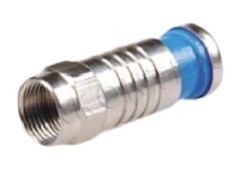
3. Practical Structural Design: The male connector (plug) directly uses the solid core of the coaxial cable as the signal probe, while the female connector (socket) adopts a 3/8-32 threaded design for a more secure connection. The main body of the male connector is usually pressed or screwed into the braided metal mesh of the cable, and most are equipped with a cable connection ring (which can also be replaced by a push-on connector), allowing flexible installation methods.
4. Environmental Considerations: Since the internal conductor is a solid wire and not corrosion-resistant, when used in outdoor or humid environments (such as outdoor antenna connections), waterproof F-type connectors must be selected to prevent corrosion from affecting the signal.
5. Careful Installation: Installing male connectors requires more care than Belling-Lee connectors—ensure the quality of the connector (inferior products can easily cause signal attenuation) and strictly match the cable size, otherwise looseness or inability to transmit signals may occur.
III. Domestic Usage Precautions
In mainland China, F-type connectors have two specifications: metric (Chinese standard) and imperial (international standard). The key difference is the inner diameter size: the metric inner diameter is 0.5mm larger than the imperial one, and they are completely incompatible. When using, it is necessary to confirm the specifications of the equipment and cable and select the correct model—for example, if the home cable TV line uses a metric cable, a metric connector must be used; otherwise, normal connection cannot be achieved.
Although small, F-type connectors are a key link in TV signal transmission. Understanding their uses, features, and specification differences can help you avoid detours during installation or replacement and ensure stable output of TV signals.