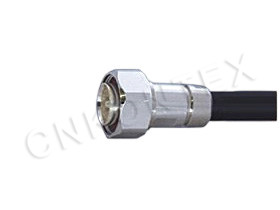
Cable Assembly: Integrated Interconnection Solution For Diverse Industries
Release time:2026-01-31
Visits:299
Cable Assembly refers to an integrated connecting component composed of cables, connectors, terminals and auxiliary fixtures (such as sleeves, brackets and heat shrink tubes), processed through crimping, soldering, injection molding and other processes to realize stable signal or power transmission between equipment or functional modules. As a core interconnection part, it simplifies equipment assembly, improves connection reliability and reduces maintenance costs, widely serving automotive, electronics, communications, aerospace, industrial automation and medical equipment fields.
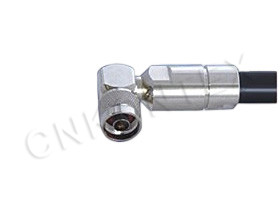
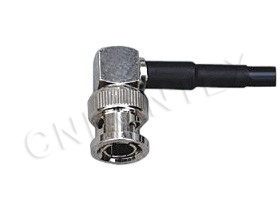
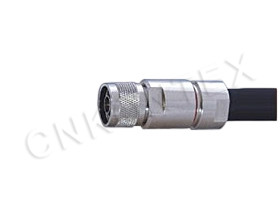
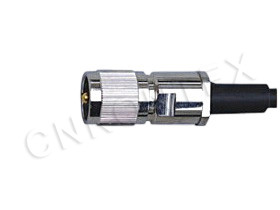
The product portfolio of Cable Assembly is diverse, tailored to different application scenarios and performance requirements. According to functions, it is divided into signal transmission cable assemblies (for transmitting data, RF signals, etc.) and power transmission cable assemblies (for delivering current). Common types include coaxial cable assemblies, wire harness cable assemblies, flat cable assemblies and custom cable assemblies, with connectors matching various standards such as USB, HDMI, SMA and FAKRA. Cable materials range from copper conductors (for high conductivity) to optical fibers (for high-speed signal transmission), with outer sheaths made of PVC, TPE or PTFE to adapt to different environmental conditions.
Key advantages of Cable Assembly lie in integrated design, reliable performance and strong adaptability. The integrated structure avoids loose connections caused by separate cables and connectors, reducing signal attenuation or power loss. Precision processing ensures stable contact between conductors and terminals, with excellent anti-interference, corrosion resistance and mechanical durability. Customizable length, connector type and structure enable it to fit space-constrained or special-environment equipment, such as high-temperature, waterproof or anti-vibration scenarios.
Strict quality control runs through the entire production process. Manufacturers adopt precision crimping and soldering technologies, comply with ISO 9001 and relevant industry standards, and conduct rigorous testing (such as continuity, insulation, tensile strength and environmental adaptability) to ensure product consistency and reliability.
With the upgrading of intelligent and miniaturized equipment, Cable Assembly is developing towards miniaturization, high density, high speed and customization, continuing to provide efficient, stable interconnection support for the development of various industries.