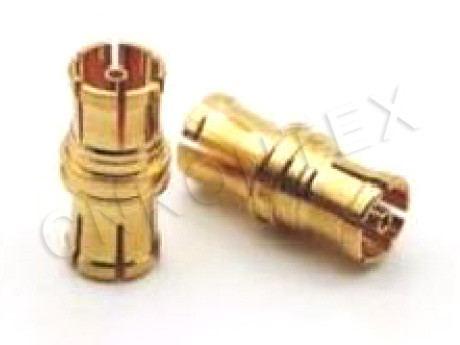
5G Board-To-Board Connection: Core Interconnection For High-Speed 5G Systems
Release time:2026-01-31
Visits:265
5G Board-To-Board (B2B) Connection refers to a high-performance interconnection solution designed to realize stable, low-loss signal transmission between printed circuit boards (PCBs) in 5G devices, complying with industry standards and adapting to the high-frequency, high-speed and miniaturized needs of 5G technology. As a key core component of 5G systems, it bridges different functional modules such as baseband boards, radio frequency boards and antenna modules, ensuring seamless collaboration and high-fidelity signal transmission, which is indispensable for the normal operation of 5G equipment.
This connection solution has outstanding performance advantages tailored for 5G scenarios. It supports ultra-high frequency transmission up to 25GHz, with impedance strictly controlled at 50Ω to ensure signal integrity, while insertion loss is as low as 0.1dB and VSWR ≤1.8:1, effectively reducing signal attenuation and distortion[Nianzhan 4]. Adopting proprietary contact shielding and isolation technology, it has excellent anti-EMI performance, avoiding mutual interference between high-speed signals[Nianzhan 4]. Its compact structure features ultra-fine pitch (down to 0.35mm) and thin stacking height, maximizing PCB space savings for miniaturized 5G devices[Nianzhan 1].
Manufactured with precision stamping and SMT assembly processes, 5G B2B Connection uses high-quality LCP materials and gold-plated contacts, ensuring mechanical robustness and corrosion resistance[Nianzhan 7]. It has a wide alignment tolerance to facilitate automated assembly and prevent pin damage, while withstanding extreme temperatures (-40℃ to +105℃) and strong vibration, meeting harsh working conditions[Nianzhan 1].
Its application scenarios cover the entire 5G industry chain, including 5G base stations (connecting BBU/AAU modules), 5G terminals (smartphones, AR/VR devices), IoT equipment and automotive electronics[Nianzhan 3]. As 5G-Advanced evolves, it is developing towards higher frequency (over 30GHz) and higher integration, continuing to empower the high-quality development of the global 5G industry.