SSMA Connector: A Reliable Solution For High-Frequency Precision RF Transmission
Release time:2026-06-19
Visits:286
In the field of high-frequency signal transmission, stability and precision are core requirements—any signal loss or distortion may affect device performance or even system operation. As a precision RF component specifically designed for high-frequency scenarios, the
SSMA connector has become the preferred solution in many industries due to its targeted structural design and excellent performance. It centers on 50-ohm impedance matching (the most common impedance standard in the RF field) and can support signal transmission up to 34GHz, providing zero-loss level signal guarantee for various high-frequency applications.
I. Core Advantages of SSMA Connectors: Born for High Frequencies
The design of SSMA is entirely centered around high-frequency precision:
- 50-ohm Impedance Matching: Precisely matches the impedance requirements of RF systems, effectively reducing signal reflection and ensuring complete transmission of signals from the source to the terminal;
- High-Frequency Support Capability: The maximum bandwidth of 34GHz covers most modern high-frequency applications (such as 5G testing, satellite communications, precision instruments), eliminating concerns about signals failing to keep up;
- Mechanical Stability: Adopting precision machining processes, it has a long plugging life and low contact resistance, maintaining stable electrical performance even in repeated plugging or vibration environments.
II. Typical Application Scenarios of SSMA Connectors
Due to its high-frequency + stable characteristics, SSMA is widely used in fields with extremely high requirements for signal quality:
- Testing and Measurement: Equipment in laboratories such as spectrum analyzers and network analyzers require zero-error signal transmission. The precision structure of SSMA ensures consistent performance after multiple plugging operations;
- Instrumentation: Internal or external interfaces of high-frequency instruments such as signal generators and oscilloscopes require miniaturized and high-precision connectors, and the compact design of SSMA is perfectly suited;
- Communication Equipment: The connection between RF modules and antennas in base stations and satellite communication systems needs to handle long-distance transmission of high-frequency signals. The low-loss characteristics of SSMA can effectively improve communication efficiency.
III. Form Selection of SSMA Connectors: Adapting to All Scenarios
To meet the needs of different installation environments, SSMA offers a variety of forms and termination methods:
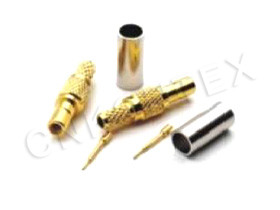
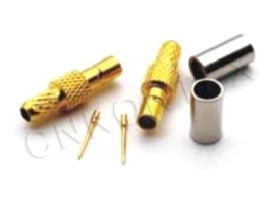
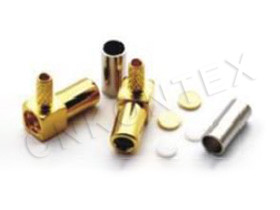
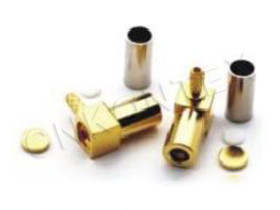
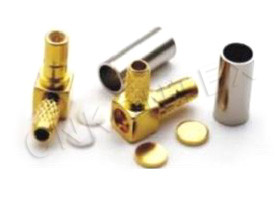
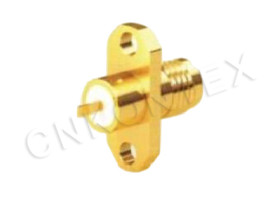
- Structure Types: Straight type is suitable for line connections with sufficient space; 90-degree right-angle type is suitable for narrow spaces (such as inside equipment) or scenarios requiring reduced cable bending; bulkhead type, 2-hole/4-hole panel type are used for fixed installation on equipment panels; pluggable type facilitates temporary or quick connections;
- Termination Methods: Including crimp, solder, and contactless solder types, adapting to RG 405, 0.085 semi-rigid cables, or dedicated high-frequency cables—no matter what type of cable you use, you can find a corresponding connection method.
IV. How to Choose the Right SSMA Connector?
When selecting a model, just focus on 3 core issues:
- Scenario Adaptation: Choose 90-degree right-angle type for small spaces, panel type for panel installation, and pluggable type for temporary connections;
- Cable Matching: Select crimp or solder termination according to the type of cable used (such as semi-rigid cable);
- Frequency Requirement: Confirm the upper frequency limit of the connector (such as whether 34GHz is needed) to avoid excessive performance or insufficiency.
Conclusion: The Stable Link for High-Frequency Transmission
From precise measurements in test laboratories to high-frequency transmission in communication systems, the SSMA connector has always played the role of connecting stability and efficiency. With 50-ohm impedance matching, 34GHz high-frequency support, and diverse form options, it has become the ideal solution for high-frequency precision RF transmission—no matter how special your application scenario is, SSMA can find an adapted way to signal transmission.