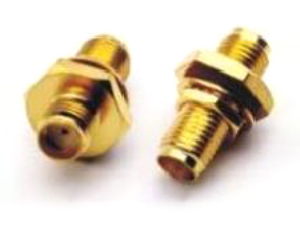
RF Adapter Series: Essential Components For Stable RF Signal Transmission
Release time:2026-01-31
Visits:263
The RF Adapter Series refers to a range of high-performance connecting components designed to bridge different RF (Radio Frequency) devices, ensuring seamless, low-loss signal transmission between incompatible interfaces. As core accessories in RF systems, these adapters play a pivotal role in maintaining signal integrity, improving system flexibility, and enhancing device compatibility, widely serving communications, test and measurement, aerospace, automotive electronics and other key fields. With the rapid development of 5G, satellite communications and the Internet of Things, the RF Adapter Series has evolved towards higher frequency, lower loss and more rugged performance to meet diverse application needs.
The RF Adapter Series boasts a comprehensive product portfolio, categorized by structure, function and application scenarios to cover various connection requirements. Primarily, they are divided into in-series and between-series adapters: in-series adapters connect the same type of RF connectors (e.g., SMA male to SMA female), used for extending cables or changing connector gender; between-series adapters convert different connector types (e.g., SMA to BNC, N-type to TNC), enabling integration between different RF systems. Common connector types include SMA, BNC, TNC, N-type and 3.5mm, with impedance options of 50Ω (for wireless systems) and 75Ω (for TV and CATV), while special-purpose adapters such as DC block and attenuator adapters cater to specific functional needs. Additionally, products are available in straight, right-angle and tee orientations, suitable for space-constrained installation environments.
Key performance advantages of the RF Adapter Series lie in ultra-low insertion loss, excellent VSWR (Voltage Standing Wave Ratio) and rugged construction. High-quality adapters feature insertion loss as low as 0.1dB at high frequencies, minimizing signal attenuation, while VSWR typically ranges from 1.05 to 1.3:1, ensuring stable signal transmission without distortion. Manufactured with brass or stainless steel bodies and precision machining, they offer strong corrosion resistance and mechanical stability, capable of withstanding harsh field conditions and repeated plugging cycles, making them field-ready and durable. Most products comply with RoHS and REACH standards, with reliable electrical connections for long-term performance.
The production of the RF Adapter Series adheres to strict quality control standards and advanced manufacturing processes. Precision CNC machining ensures dimensional accuracy, while gold or silver plating on contact surfaces enhances conductivity and reduces signal loss. Manufacturers implement ISO 9001 quality management systems, conducting rigorous testing on each product, including insertion loss, VSWR, insulation resistance and mechanical durability, to ensure consistency and reliability.
Application scenarios of the RF Adapter Series are extensive and diverse. In communications, they are widely used in 5G base stations, satellite communications and IoT devices, ensuring stable signal transmission between antennas, transceivers and other components. In test and measurement, they connect test instruments and DUTs (Devices Under Test), supporting accurate signal detection in laboratories and industrial testing environments. They also play a crucial role in aerospace, military radar and automotive electronics, providing reliable RF connections under extreme conditions.
Driven by technological innovation and market demand, the RF Adapter Series is developing towards higher frequency, miniaturization and integration. With frequencies covering DC to 110 GHz, they meet the needs of high-frequency communication systems, while miniaturized designs adapt to the trend of compact electronic devices. The global market for RF adapters is growing steadily, with the Asia-Pacific region emerging as a key growth driver, and continuous technological upgrades will further expand their application scope, empowering the development of the global RF industry.